
WANEP Demands Strategic Youth Investment as the Anchor for Nigeria’s Peace Architecture
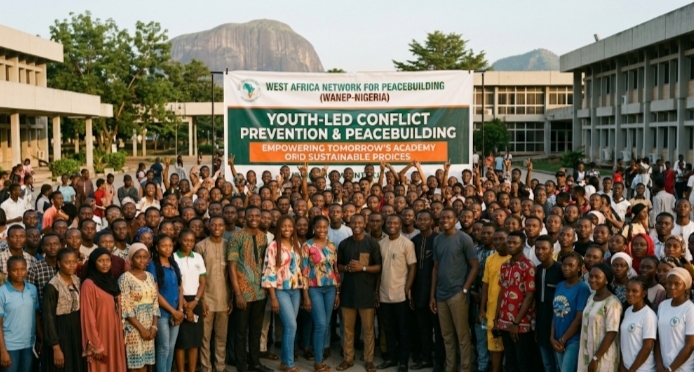
ABUJA, NIGERIA — As the world celebrate the International Youth Day, the West Africa Network for Peacebuilding (WANEP-Nigeria), in strategic partnership with local and international civil society organizations, has intensified its grassroots peacebuilding and conflict prevention interventions to address rising human security challenges across Nigeria.
Amid persistent security threats—including banditry, violent extremism, resource-based conflicts, and political instability—WANEP-Nigeria continues to position itself as a pivotal catalyst for sustainable peace through early warning frameworks, community information resilience, and inclusive governance initiatives.
Core Interventions and Community Impact
Youth and Women Empowerment: Through collaboration with the Global Network of Women Peacebuilders (GNWP) and NORAD, WANEP-Nigeria has spearheaded national forums on Women, Peace and Security (WPS) and Youth, Peace and Security (YPS). National Network Coordinator Dr. Bridget Osakwe emphasized that engaging youth and women directly mitigates vulnerability to radicalization while establishing actionable roles in early warning systems, local mediation, and community policing.
- Countering Disinformation: Partnering with the Centre for Journalism Innovation and Development (CJID), WANEP-Nigeria trained community leaders across Sokoto, Kebbi, and Niger States to identify, report, and neutralize violence-inciting disinformation, thereby safeguarding localized peace structures.
- Regional Early Warning Capabilities: Leveraging its institutional relationship with ECOWAS, WANEP-Nigeria provides critical ground-level data to track regional flashpoints, tracking conflict triggers and championing human security policies across volatile zones.
Sustaining the Peacebuilding Infrastructure
Under the leadership of its Board of Directors, WANEP-Nigeria is expanding direct engagement with state institutions and grassroots networks. By moving away from piecemeal responses toward structured, community-owned peace architecture, the network remains a foundational partner in driving stability, human rights advocacy, and democratic governance across Nigeria and the broader West African sub-region.