A Loud Silence in Benin City: Why Voters Boycotted the Edo Local Government Election
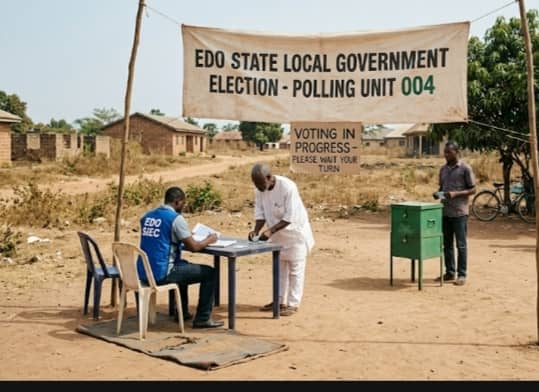
BENIN CITY — Strikingly empty polling units and deserted streets characterized most parts of Benin City as residents largely boycotted the Edo State Local Government elections, underscoring a deep-seated political apathy sweeping through the state capital.
Electoral officials at various polling stations in Oredo, Ikpoba-Okha, and Egor Local Government Areas sat idly for hours, waiting for voters who never arrived. The few locations that saw activity were dominated by party agents and security personnel rather than the voting public.
A Growing Wave of Voter Apathy
The incredibly low turnout is not a sudden anomaly but a reflection of a growing disillusionment among residents regarding the electoral process. Analysts point out that the enthusiasm that traditionally precedes grassroots elections was entirely absent.
Local traders and residents who spoke on the condition of anonymity expressed total indifference.
“What is the point of standing in line when we already know who will be declared the winner?” said a resident in the GRA axis of Benin City.
“Local government elections in Nigeria have just become coronations for whoever is in power at the state level.”
The Shadow of the 2023 General Elections
Political observers are strongly linking this widespread boycott to the fallout from the 2023 general elections, which saw the ascension of President Bola Ahmed Tinubu.
Eroded Trust: For many voters in Edo State—which historically recorded a surge of passionate youth engagement during the 2023 presidential cycle—the controversial outcome of that election severely bruised public trust in democratic institutions.
Disillusionment: The perceived discrepancy between the votes cast and the final results announced in 2023 left a bitter taste for many. The prevailing sentiment in Benin City suggests that the electorate now views the ballot box as ineffective, translating into the severe compliance drop witnessed during this local poll.
Opposition Boycott Leaves Fields Empty
Further compounding the ghost-town reality of the election was the deliberate absence of major political parties. Citing a lack of confidence in the independence of the State Independent Electoral Commission (EDSIEC), several prominent opposition parties chose to sit out the election entirely.
With most major parties refusing to participate, the election lacked the competitive edge required to mobilize the electorate. The absence of robust opposition campaigns meant there was little to no political education or incentive to draw voters out of their homes.
As the quiet exercises wrap up, the overwhelming silence at the polls sends a loud message to the political class: without transparency and systemic reform, winning an election where nobody shows up may soon become the norm.