Unmasking the Corporate Polluters: How SEDI and Dr. Tom Aneni are Revolutionizing Waste Accountability in Edo State
By Isaac Eranga
In the fight against environmental degradation, the line between passive awareness and transformative action is often defined by hard data. For decades, rural and semi-urban communities across Nigeria have been trapped in a vicious cycle: clogged drainage channels, toxic burn piles, and severe plastic pollution, while public narrative routinely blamed local residents for “indiscriminate dumping.”
That narrative has now been permanently shattered in Edo State
At the center of this paradigm shift is the Sustainable Environment Development Initiative (SEDI), led by its dogged and relentless Executive Director, Dr. Tom Aneni. Through an investigative scientific intervention that traced plastic pollution directly back to multi-national and domestic corporate boardrooms, SEDI has weaponized brand auditing to demand systemic corporate accountability while aligning directly with Governor Monday Okpebholo’s SHINE Agenda to make Edo clean and sustainable.
The Investigation: Tracing Trash Back to the Boardroom
Under Dr. Aneni’s leadership, SEDI deployed an intensive field investigation in the Evboneka community of Ovia North-East Local Government Area. Operating under the international frameworks of the Global Alliance for Incinerator Alternatives (GAIA) and Break Free From Plastic (BFFP), SEDI mobilized local monitors and community volunteers for a meticulous 7-day sweep across residential zones, commercial hubs, roadside corridors, and drainage channels.
Rather than simply sweeping away the refuse, Dr. Aneni’s team cataloged, weighed, and classified every single piece of recovered waste by resin type and corporate branding.
The Scientific Findings
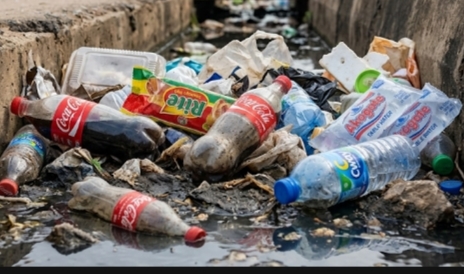
The audit recovered a total of 16.85 kg of plastic waste, revealing a heavy concentration of single-use beverage packaging:
Polyethylene Terephthalate (PET) — 69%: Consisting primarily of soft drink, energy drink, and bottled water packaging.
High-Density Polyethylene (HDPE) — 31%: Comprising household detergent jugs, chemical containers, and jerrycans.
Corporate Accountability: Naming the Top Polluters
By isolating items with visible corporate logos, Dr. Aneni’s investigative team proved that a small cluster of beverage manufacturing giants is overwhelmingly responsible for the plastic waste choking local ecosystems:
The Coca-Cola Company: 256 items | 6.60 kg (PET) — Accounts for approximately 39% of the total plastic weight collected.
Akogate Groups Limited: 79 items | 1.80 kg (PET)
Seven-Up Bottling Company: 70 items | 1.60 kg (PET)
American Cola: 54 items | 1.00 kg (PET)
Monster Energy: 41 items | 1.00 kg (PET)
Cway Limited: 41 items | 1.20 kg (PET)
Rite Foods Limited: 17 items | 0.40 kg (PET)
Intercontinental Distillers Limited: 13 items | 0.65 kg (HDPE)
Fresh Yoghurt: 13 items | 0.90 kg (HDPE)
Maltina Limited: 12 items | 0.60 kg (PET)
Mobil Super: 4 items | 0.80 kg (HDPE)
Nestle Pure Life: 2 items | 0.10 kg (PET)
Roundup Herbicide: 1 item | 0.20 kg (HDPE)
The investigation unmasked The Coca-Cola Company as the single largest contributor of plastic waste in the community by both count and total weight, proving that massive corporate packaging footprints are flooding rural areas that lack formal municipal collection infrastructure.
Dr. Tom Aneni: The Dogged Champion of Environmental Justice
The success of this investigation rests on the tenacity of Dr. Tom Aneni. A dedicated environmental scientist and advocate, Dr. Aneni has long argued that educating citizens to sort their trash is meaningless if corporate giants continue to flood markets with unrecoverable single-use plastics and if local authorities lack structural off-take systems.
Dr. Aneni’s hands-on leadership during the Evboneka audit transformed community sentiment. By introducing “Town Hall” info-sessions and door-to-door awareness walks alongside the waste sweeps, he successfully shifted the local mindset from self-blame to demanding corporate accountability.
Driven by his conviction that data must lead policy, Dr. Aneni has repeatedly championed aggressive environmental reforms—including strong advocacy for bans on single-use plastics and promoting community-level organic waste composting as a tool for ecological restoration.
Aligning SEDI’s Vision with Gov. Okpebholo’s SHINE Administration
SEDI’s grassroots action directly complements the developmental vision of Governor Monday Okpebholo’s SHINE Agenda (Security, Health, Infrastructure, Nutrition, and Education).
Waste management sits firmly at the intersection of Health and Infrastructure under the SHINE blueprint. Unmanaged plastic waste blocks municipal drainage channels, creating artificial flood zones, degrading roads, and breeding disease vectors. By working to clean up Edo’s communities, eliminate plastic blockages, and promote sustainable circular economies, SEDI provides the empirical backing and field operations required to actualize Governor Okpebholo’s vision for a clean, healthy, and modern Edo State.
Bridging Advocacy and Governance: The Strategic Meeting with the Waste Management Board
Recognizing that field data is only as powerful as the policy enforcement it generates, Dr. Tom Aneni led a high-level SEDI delegation on a strategic advocacy visit to the leadership of the Edo State Waste Management Board.
Presenting the stark metrics from the Evboneka audit to the board, Dr. Aneni demonstrated how localized brand audits can be used as enforcement leverage. During the meeting, Dr. Aneni and the SEDI team advocated for concrete, collaborative policy actions:
Enforcing Extended Producer Responsibility (EPR): Utilizing audit evidence in partnership with the Edo State Ministry of Environment and NESREA to compel major corporate polluters—led by Coca-Cola—to co-fund community Material Recovery Facilities (MRFs) and local recycling hubs.
Decentralized Waste Infrastructure: Integrating community-led source segregation (such as household “two-bag systems”) into official state waste collection routes, ensuring that sorted recyclables do not end up in open landfills.
Institutionalizing Incentive-Based Recycling: Establishing public-private partnerships that link plastic collection to immediate economic benefits for local households, turning waste into wealth in alignment with state economic goals.
Through data-backed advocacy, scientific rigor, and strategic engagement with state authorities, Dr. Tom Aneni and SEDI are changing the narrative around environmental protection in Edo State—proving that true sustainability begins when polluters are held accountable and communities are empowered to safeguard their own environments.
Isaac Eranga is an Environmental and Peace Journalist based in Benin City, Edo State