Redefining the Social Contract: Organised Labour as the Final Safeguard Against Economic Alienation
By Isaac Eranga – Labour Standard Expert
Organised Labour stands as the bedrock of socio-economic progress, institutional accountability, and human dignity. Beyond its traditional mandate of wage negotiations and dispute resolution, unionism is an indispensable engine of national development. In any sovereign state, the productivity of the workforce dictates the trajectory of gross domestic product, structural modernization, and societal stability. Yet, a severe disconnect exists between the value generated by workers and the harsh reality in which they survive.
The Global Labor Index and the Nigerian Worker
Data paints a somber picture of the environment in which the Nigerian worker operates. The International Trade Union Confederation (ITUC) Global Rights Index consistently ranks Nigeria among the world’s most challenging environments for workers—placing the nation in Rating 5 (“No guarantee of rights”). This index reflects systemic violations of fundamental labor rights, including restrictions on collective bargaining, arbitrary union crackdowns, and inadequate worker protection laws.
Despite generating national wealth across oil, agriculture, service, and industrial sectors, Nigerian workers occupy a precarious tier in global labor standings:
- Living Standards vs. Earnings: Despite the enactment of the national minimum wage, skyrocketing inflation, subsidy removals, and currency devaluation have effectively neutralized wage gains, keeping real purchasing power critically low.
- Poverty and Malnutrition: Millions of employed citizens live in multi-dimensional poverty, earning “poverty wages” that cannot cover basic nutritional or housing needs.
- Health and Social Insecurity: The absence of comprehensive universal health coverage leaves workers exposed to catastrophic out-of-pocket medical expenses, turning treatable illnesses into life-threatening crises.
- Self-Alienation: Subject to precarious contracts, informalization, and stressful working environments without adequate safety nets, the worker experiences psychological detachment—feeling alienated from the wealth they actively create.
Labor Management: The Battles of NLC and TUC
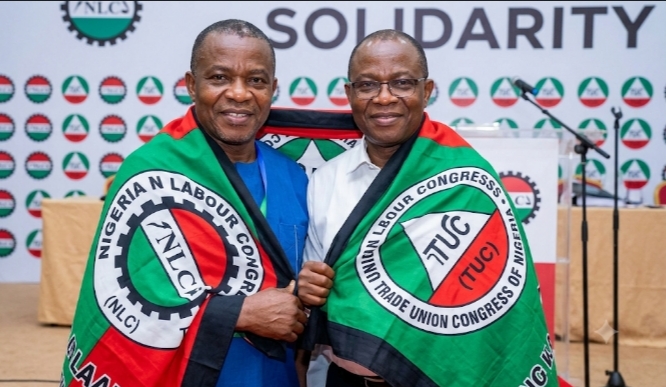
In response to these systemic vulnerabilities, the Nigeria Labour Congress (NLC) and the Trade Union Congress (TUC) maintain a crucial dual role in labor management and state policy intervention. Through strategic engagements, industrial actions, and legislative advocacy, both centers continuously push back against policies that degrade the working class:
- Wage Advocacy: Through continuous negotiations with federal and state authorities, the central unions secured the national minimum wage benchmark with a mandatory review cycle, directly mitigating the rapid erosion of real income caused by economic reforms.
- Policy Engagement: By resisting unfair energy tariff hikes, fuel subsidy shocks, and unmitigated austerity measures, labor serves as a vital civic check against socio-economic policies that disproportionately harm the vulnerable.
- Workplace Decency: Through unionizing informal sectors, battling contract staff exploitation, and pushing for Occupational Safety and Health (OSH) standards, the NLC and TUC escalate compliance standards across private and public enterprises.
- Social Dialogue: Engaging in tripartite consultations alongside the Federal Ministry of Labour and employers’ federations (NECA) maintains industrial harmony while protecting constitutional rights to collective bargaining.
Organised labour is not an adversary to state growth; it is its most vital partner. For Nigeria to achieve sustained national development, economic policies must shift from treating labor as an expense to valuing workers as the core driver of national prosperity. True development is impossible when those who build the nation remain trapped in poverty, disease, and structural marginalization.