Beyond the Politics of Empowerment: Signing the WPS Action Plan is the Greatest Empowerment Edo State Can Render to Its Women
By Isaac Eranga
BENIN CITY, EDO STATE: While the achievements highlighted by the Coordinator of the Office of the First Lady, Mrs. Edesili Okpebholo Anani, showcase positive intent, celebrating incremental wins on Edo’s 35th anniversary ignores the systemic gap in the state’s gender architecture. Appointing a handful of women to political positions, running awareness drives, and managing GBV committees are commendable reactive measures, but they do not equal structural empowerment.
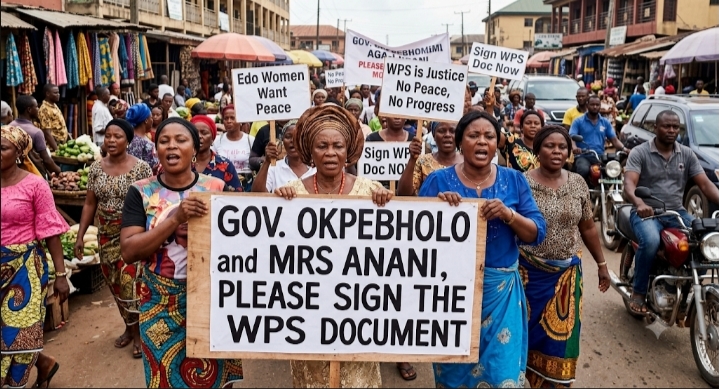
Without formally signing and adopting the validated Women, Peace, and Security (WPS) State Action Plan (SAP) under UN Security Council Resolution 1325, women and youths in Edo State will remain systematically marginalized from the core processes that govern their safety, economic future, and political representation.
The Gap Between Promises and Policy
- Superficial Inclusion vs. Mandatory Representation: Celebrating three female candidates for the House of Assembly highlights how low the baseline has been. Without the binding framework of the WPS Action Plan, affirmative action remains at the whims of current political leadership rather than being locked in as a statutory requirement across state and local government structures.
- Reactive GBV Management vs. Root-Cause Prevention: Establishing school clubs and tech-facilitated GBV policies provides temporary relief. The WPS framew ork addresses the broader peace and security continuum, directly linking gender violence to economic instability, community security, and justice sector reforms.
- Youth Marginalization in Security Governance: Youths are frequently framed merely as victims or perpetrators of crime and irregular migration. The WPS agenda positions young people—particularly young women—as active stakeholders and peacebuilders in state policy, rather than passive targets of periodic “empowerment forums.”
Why Signing the WPS is the Ultimate Empowerment for Edo State
- Current Approach: Relying on fragmented initiatives leaves progress dependent on the shifting priorities of individual administrations.
- WPS Framework: Establishing a binding state policy creates sustainable, structural power that outlasts political cycles.
Signing the validated WPS document is not a bureaucratic formality; it is an institutional guarantee. Passing and implementing this document represents the single most transformative action the Edo State Government can take for several reasons:
- Institutionalizes Power Beyond Political Cycles: It shifts women’s rights from charity and political favor into legally recognized security and governance rights that survive changing administrations.
- Unlocks Global Development Resources: Validating the WPS framework aligns Edo State with international benchmarks, opening doors for international partnerships, technical support, and donor funding specifically targeted at gender-responsive peacebuilding and economic resilience.
- Integrates Women into Core Security Decision-Making: True security in Edo—from tackling human trafficking networks to resolving land conflicts—requires women at the table where decisions are made, not just in advisory roles.
The Verdict
Ad-hoc programs and media highlights cannot substitute for sustainable policy. If Governor Monday Okpebholo’s administration is truly committed to leaving a legacy of inclusion and safety, it must move beyond political appointments and committee launches. Signing and fully funding the WPS State Action Plan is the single greatest empowerment the state can render to Edo women and the Edo people as a whole. Until that document is signed, progress remains fragile, and Edo’s women and youth will continue to sit at the margins of sustainable development.