
Exclusive: ‘A Complete Surprise’ – New Wild Cat Species Discovered With Only One Known Living Member
SOCIAL REPORTERS NEWS SERVICE
SPECIAL ENVIRONMENTAL DISPATCH
―――――――――――――――――――――――――――――――――――――――――――――
Exclusive: ‘A Complete Surprise’ – New Wild Cat Species Discovered With Only One Known Living Member
Culled & Reported by Isaac Eranga | Founder, Social Reporters News Service
LA PAZ, Bolivia — A tiny wild cat currently residing at a sanctuary in Bolivia has been identified as the first new species of wild cat described by science in more than a century, according to a landmark genetic study published in the journal Current Biology.
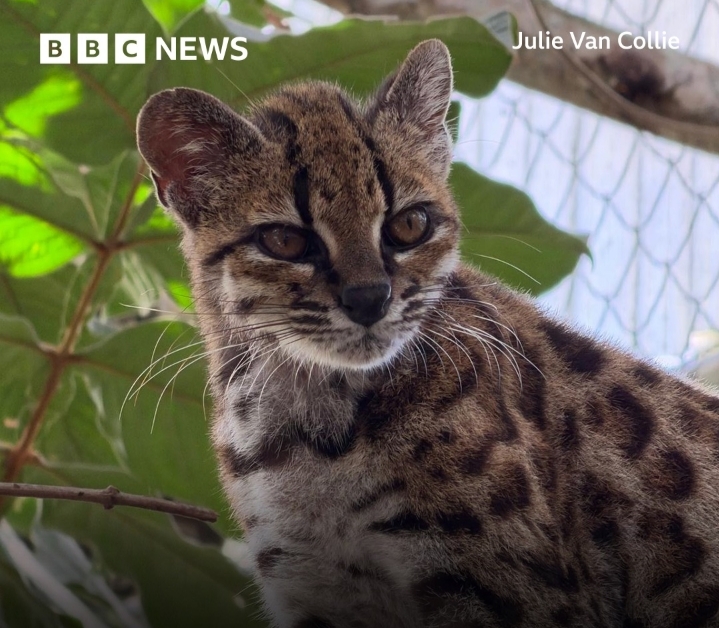
The male cat—weighing a mere 1.4 kilograms (3 pounds) and measuring just 46 centimeters (18 inches) in length—is currently the only verified living member of its species known on Earth.
For nearly a decade, staff at the Senda Verde Wildlife Sanctuary treated the animal as an unusually small resident. He had arrived around 2017 after a local resident found him on a roadside, mistaking him for an abandoned domestic stray kitten. After feeding the mystery animal a home diet of noodles, eggs, and rice, the family quickly realized his wild nature made him impossible to keep.
Now, breakthrough whole genome sequencing has revealed a staggering evolutionary reality: he is not a stray domestic cat, but the sole living representative of a distinct wild felid species that diverged from its closest relatives approximately 1.4 million years ago.
Hiding in Plain Sight
Researchers have formally named the new species the Tilcayo cat (Leopardus tilcayo), honoring “Tilcayo”—the title indigenous communities in the Bolivian Andes have long used to describe the elusive, diminutive predator.
Small wild cats across South America—collectively referred to as “tiger cats”—are notoriously difficult to distinguish, creating what taxonomists call a long-standing “taxonomic nightmare.”
| Key Species Differences: Leopardus tilcayo vs. Domestic Cat
• Weight & Size: L. tilcayo weighs approximately 1.4 kg (3.0 lbs), making it less than half the size of an average 3.6 to 4.5 kg (8.0 to 10.0 lbs) domestic house cat. • Coat Pattern: Features a light brown background marked by unusually large, bold, and irregular rosettes, distinctly different from solid, tabby, or calico domestic patterns. • Native Habitat: Native strictly to the high-elevation, humid Bolivian Yungas cloud forest, unlike global domestic cats. • Evolutionary Lineage: Its genetic branch split from other Neotropical cats around 1.4 million years ago, compared to domestic cats which were domesticated roughly 10,000 years ago. |
The discovery began when Bolivian biologist Paola Nogales-Ascarrunz, founder of the Bolivian Felids Research Program, noticed the sanctuary cat’s unique coat pattern while compiling an animal field guide.
Follow up genomic analysis of 38 South American cats and museum specimens revealed that the Neotropical Leopardus lineage is far more complex than previously understood. Rather than just one or two widely distributed tiger cats, the evolutionary tree splits into at least four distinct species across the continent:
▪ Northern Tiger Cat (Leopardus tigrinus) — Found in Northern South America.
▪ Southern Tiger Cat (Leopardus guttulus) — Found in Southern Brazil and neighboring areas.
▪ Clouded Tiger Cat (Leopardus pardinoides) — Inhabits high-altitude cloud forests.
▪ Tilcayo Cat (Leopardus tilcayo) — The newly isolated lineage that diverged 1.4 million years ago.
An Urgent Conservation Crisis
While having a single living specimen at a sanctuary gives scientists an unprecedented opportunity to study the physical characteristics of Leopardus tilcayo, conservationists warn that the species is already on the brink of extinction.
Because wildlife camera traps frequently lump all small spotted cats together, researchers currently have no confirmed population estimates for the species in the wild. Meanwhile, its natural habitat in the steep, foggy cloud forests of the Bolivian Yungas faces severe and ongoing threats from illegal logging, gold mining, and agricultural expansion.
| “You cannot protect an animal if science does not know it exists. Formally recognizing the Tilcayo cat is the critical first step to securing its natural habitat before it is lost entirely.”
— Dr. Caroline Sartor, Study Co-Author |
Reported & Prepared by Isaac Eranga for Social Reporters News Service.